Tranquilidad & La independencia está a una llamada
(888) 493-1475 - Haga clic para llamar consigue un MES GRATIS de servicio.
Standard smartwatches and medical alert smartwatches look almost identical on the wrist. Both tell time. Both track steps. Both can detect a fall. But what happens after that fall is where these two categories of wearable technology diverge–and for older adults, that difference can be the difference between getting the right help fast and waiting for someone to notice something went wrong.
A standard smartwatch like the Apple Watch or Samsung Galaxy Watch is a powerful everyday device. It can call 911, send crash alerts, and notify emergency contacts. A medical alert smartwatch is built around a different promise: press one button, and a trained emergency specialist answers in seconds, assesses the situation, and dispatches the right kind of help-whether that means an ambulance, a neighbor, or a reassuring voice confirming everything is fine.
Why This Decision Matters More Than Most Tech Purchases
For most gadget decisions, the stakes are low. Choosing the wrong streaming device or fitness tracker is an inconvenience, not a crisis. Choosing the wrong safety device for a senior is different.
Según el Centros para el Control y la Prevención de Enfermedades (CDC), over 14 million adults ages 65 and older-roughly one in four-report falling every year. About 37% of those who fall require medical treatment or experience restricted activity for at least one day, resulting in an estimated nine million fall injuries annually. Falls are the leading cause of injury-related death among older adults, and the age-adjusted fall death rate increased by 21% between 2018 and 2024.
These numbers make one thing clear: having the right device on your wrist is not just a preference. It is a safety decision that affects outcomes.
What Is a Standard Smartwatch?
A standard smartwatch is a consumer wearable designed for everyday life. Popular models include the Apple Watch Series 10, Samsung Galaxy Watch7, and Google Pixel Watch 3. These devices offer a broad set of features:
- Fitness and activity tracking (steps, calories, distance, sleep)
- Heart rate monitoring and blood oxygen readings
- Phone calls, text messages, and app notifications
- Mobile payments, music streaming, and navigation
- Voice assistants (Siri, Google Assistant, Bixby)
- Fall detection and Emergency SOS on compatible models
Some standard smartwatches include safety features that overlap with medical alert devices. The Apple Watch, for example, can detect hard falls, sound an alarm, and automatically call 911 if the wearer is immobile for about one minute. Samsung Galaxy Watch models offer similar hard fall detection that can trigger SOS alerts to emergency contacts.
These features are genuinely useful. But they were designed as additions to a lifestyle device, not as the core function of a dedicated safety system. That distinction shapes cómo funcionan los dispositivos de detección de caídas and how each type of device handles the most critical moments.
What Is a Medical Alert Smartwatch?
A medical alert smartwatch is a wrist-worn device built specifically for emergency protection. It looks like a modern smartwatch-with a digital display, a wristband, and basic apps-but its primary job is connecting the wearer to professional emergency help as fast as possible.
Core features of a sistema de alerta médica in smartwatch form include:
- A dedicated help button that connects directly to a 24/7 monitoring center
- Automatic fall detection calibrated for the types of falls older adults experience
- GPS and WiFi location tracking that shares the wearer’s position with emergency operators
- Two-way voice communication through the watch itself-no phone needed
- A personalized emergency plan with designated contacts and response instructions
Unlike a standard smartwatch, a medical alert smartwatch does not rely on the wearer navigating apps, scrolling through menus, or configuring complex settings in a stressful moment. The emergency workflow is simple by design: press the button (or let fall detection trigger automatically), speak with a live specialist, and get help.
Medical alert smartwatches also operate independently. They have their own built-in cellular SIM card and connect to the monitoring center without needing a paired smartphone, a Wi-Fi connection, or a separate cellular plan. That independence is a critical advantage for seniors who may not carry a phone everywhere they go.
Medical Alert Smartwatch vs Standard Smartwatch
The table below highlights the most important differences between these two types of devices:
| Características | Alerta médica Smartwatch | Standard Smartwatch |
|---|---|---|
| Primary purpose | Emergency help and senior safety | Fitness, apps, lifestyle features |
| Who answers in an emergency | Trained monitoring center specialist | 911 dispatcher (or no one, depending on settings) |
| Emergency workflow | Press button → live specialist answers in seconds | Navigate SOS screen → device calls 911 → wait on hold |
| Fall detection focus | Calibrated for senior fall patterns, including soft falls | Designed for hard, high-impact falls |
| GPS in emergencies | Location automatically shared with monitoring center operator | Location shared with 911 if cellular connection is active |
| Requires a smartphone | No – operates independently with built-in cellular | Yes – most safety features require a paired phone |
| Monthly monitoring | Yes – 24/7 professional monitoring included | No monitoring center; may need separate cellular plan |
| Battery life priority | Optimized for safety; daily charging typical | Optimized for features; 18–36 hours typical |
| Caregiver features | Location tracking, caregiver notifications, personalized plans | Limited; varies by app and setup |
| Ease of use in crisis | One-button emergency access | Requires screen navigation and device familiarity |
These differences matter most in the moments when someone needs help quickly and may not have the clarity, strength, or time to navigate a complicated device.
Where Standard Smartwatches Fall Short for Senior Safety
Standard smartwatches are impressive technology. But several limitations make them less reliable as a primary safety device for older adults.
Fall Detection Is Designed for Active Adults, Not Seniors
Apple Watch fall detection is built to identify hard falls-the kind that happen during vigorous activity, from a height, or with significant force. According to Apple’s support documentation, the watch detects “hard falls” and may not identify every fall.
The problem is that many senior falls are not hard falls. Slow slides from a chair, gradual losses of balance, and low-impact trips are common among older adults, and wrist-based consumer devices frequently miss these patterns. Independent testing has confirmed this: in a six-month comparison, testers found that an Apple Watch “occasionally failed to register actual falls,” while a dedicated medical alert device detected almost every one.
Research also shows that wrist-based fall detection on consumer devices produces higher false-positive rates from everyday arm movements like cooking, gardening, or reaching overhead, which can lead to alarm fatigue and eventually cause users to disable the feature entirely. Understanding how to choose a fall detection system for seniors can help families evaluate these trade-offs.
Emergency Response Goes to 911, Not a Monitoring Center
When an Apple Watch or Samsung Galaxy Watch detects a fall or the wearer triggers an SOS, the device calls 911. On the surface, that sounds like the right call. But there are important limitations:
- 911 dispatchers are not trained specifically for senior medical alert situations. They handle high volumes of calls across all emergency types.
- The wearer may not need an ambulance-they may just need a family member, a neighbor, or reassurance. A 911 call can trigger an unnecessary (and expensive) emergency response.
- If the wearer cannot speak, 911 may not have enough context. There is no pre-loaded medical history, no personal emergency plan, and no designated caregiver contact list.
- In some regions, if the wearer hangs up or cannot respond, emergency services will dispatch automatically-even for a false alarm.
A monitored medical alert smartwatch takes a different approach. The call goes to a certified care specialist at a professional monitoring center. That specialist has the wearer’s medical history, emergency contacts, and response preferences on screen. They assess the situation, decide whether to dispatch emergency services or contact a family member, and stay on the line until the situation is resolved.
Smartphone Dependency Creates a Gap
Most standard smartwatch safety features require a paired smartphone nearby. Apple Watch fall detection, for example, requires an iPhone for setup and relies on the phone’s cellular connection for emergency calls in many configurations.
For seniors who forget to carry their phone, leave it in another room, or simply do not own a smartphone, this dependency creates a dangerous gap. A medical alert smartwatch connects to the monitoring center on its own-no phone, no Wi-Fi, no extra steps.
Why a Medical Alert Smartwatch Is the Stronger Choice for Senior Safety
For older adults whose primary need is reliable emergency protection, a medical alert smartwatch offers several clear advantages.
24/7 Professional Monitoring with Fast Response Times
The most important advantage of a medical alert smartwatch is the human response behind it. When the wearer presses the help button or fall detection activates, the call goes to a monitoring center staffed around the clock with trained emergency specialists.
The best medical alert companies answer these calls in seconds, not minutes. LifeStation, for example, maintains US-based monitoring centers in New Jersey and Texas with an average response time of less than 15 seconds – one of the fastest in the industry. That speed is backed by TMA certification and UL listing, which are industry standards for monitoring center quality.
This is fundamentally different from a 911 call. The specialist already knows who is calling, where they are, what their medical conditions are, and who should be contacted first. They follow a personalized emergency plan-not a generic dispatch script.
Fall Detection Built for How Seniors Actually Fall
Medical alert smartwatches use fall detection sensors specifically designed for the types of falls that affect older adults. While no fall detection device can detect 100% of falls, medical alert devices are generally calibrated to recognize a wider range of fall patterns, including the slower, lower-impact falls that consumer smartwatches often miss.
When a fall is detected, the device does not just sound an alarm and wait. It connects the wearer directly to a live operator who can assess the situation and take action-even if the wearer cannot speak or press a button.
Users should always press the help button if they are able to do so after a fall. Automatic fall detection is an additional safety layer, not a replacement for the help button.
GPS Location Shared Automatically with Emergency Operators
When an alert is triggered on a medical alert smartwatch, the wearer’s GPS location is transmitted directly to the monitoring center operator. The operator can see the wearer’s position on a map the moment they answer the call, which means they can dispatch help to the right location without relying on the wearer to describe where they are.
This is especially valuable for seniors who spend time outside the home-walking, running errands, traveling, or visiting friends. For active older adults, having a medical alert system designed for traveling seniors makes sure that safety does not stop at the front door.
No Smartphone Required
A medical alert smartwatch works as a standalone device. It includes its own cellular SIM card (typically 4G LTE) and connects to the monitoring center independently. There is no need to pair it with a phone, maintain a separate cellular plan, or keep a smartphone charged and nearby.
This independence is a critical advantage for older adults who may not own a smartphone, who frequently forget to carry their phone, or who live in situations where their phone may be out of reach during a fall.
Simpler to Use in a Crisis
In an emergency, cognitive load matters. A person who has just fallen, experienced chest pain, or feels dizzy should not have to remember how to navigate a touchscreen, find the right app, or scroll through a menu.
Medical alert smartwatches are designed around a single, intuitive action: press the help button. That is it. The device handles the rest-connecting to the monitoring center, transmitting location, and enabling two-way voice communication. Learn more about what happens when you press a medical alert button.
Discreet, Modern Design That Seniors Will Actually Wear
One of the biggest challenges with traditional medical alert devices-pendants worn around the neck or clipped to a belt-is that many older adults refuse to wear them. The devices can feel clinical, stigmatizing, or uncomfortable, and a device that stays in a drawer does not protect anyone.
A medical alert smartwatch solves this problem by looking like any other modern watch. It is discreet, familiar, and easy to accept as part of a daily routine. For families, that means the person they are trying to protect is more likely to actually wear the device every day-which is the single most important factor in whether a safety device works. These are among the key ventajas de los sistemas de alerta médica that families value most.
When a Standard Smartwatch May Still Be the Right Choice
A standard smartwatch can be a good fit for someone who:
- Is comfortable with technology and already uses a smartphone confidently
- Wants a broad set of features: fitness tracking, notifications, music, mobile payments, apps
- Has no significant fall risk or medical conditions that require emergency monitoring
- Lives with family, a caregiver, or in a supervised environment where help is always nearby
- Can remember to charge the device nightly and manage software updates
- Mainly wants backup safety features, not a primary emergency device
For tech-comfortable adults who are not at elevated risk, an Apple Watch or Samsung Galaxy Watch provides useful safety features on top of a full lifestyle device. But for seniors whose top priority is reliable emergency protection-especially those who live alone, spend time outside the home unsupervised, or have a history of falls-a medical alert smartwatch is the more focused and dependable choice.
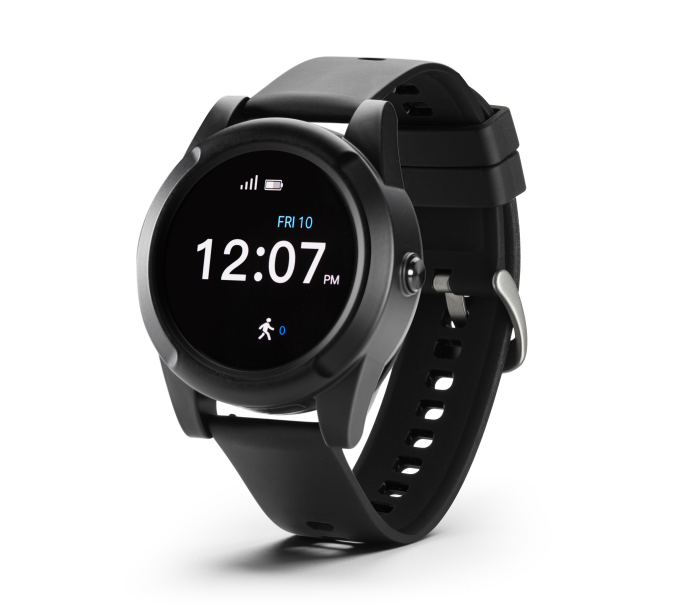
LifeStation Sidekick Smart: A Medical Alert Smartwatch Built for Real Emergencies
LifeStation’s Sidekick Smart is a medical alert smartwatch designed for adults who want professional emergency protection in a device they will actually wear every day. Named “Best Medical Alert with Smartwatch Features” by U.S. News & World Report, LifeStations’s Sidekick medical alert smart watch combines the familiar look of a modern watch with the emergency protection that matters most.
Características principales
- Detección automática de caídas – Fall detection sensors identify a fall and connect the wearer to a live operator automatically, even if they cannot press the button.
- GPS + WiFi Location Tracking – Combines GPS and WiFi signals to provide accurate location data to emergency operators the moment they answer.
- Supervisión 24/7 en EE.UU. – Certified care specialists at LifeStation’s monitoring centers in New Jersey and Texas answer every alert with an average response time of less than 15 seconds.
- Two-Way Voice Communication – Speak directly with emergency support through the watch. No phone needed.
- Water Resistant (IPX8) – Wear in the shower, while washing hands, or during outdoor activities for continuous protection.
- Pulsómetro – Check heart rate anytime. Not intended for clinical diagnosis.
- Podómetro – Track daily step count to support an active, healthy lifestyle.
- Weather App – View current conditions and forecast directly on the watch.
- 4G LTE Cellular – Built-in cellular connection operates nationwide without a smartphone.
- Garantía de devolución del dinero en 30 días – Try the system for 30 days. If not satisfied, return the device for a full refund.
Technical Specifications
| Screen | 1.82-inch LCD, 360 × 320 resolution, capacitive touch |
| Case Size | 47mm |
| Band | 24mm with spring pin; circumference adjusts from 7″ to 9″ |
| Network | 4G LTE cellular data (nationwide coverage) |
| Connectivity | Bluetooth, WiFi, 4G LTE |
| Resistencia al agua | IPX8 rated – safe for showers and hand washing; do not submerge |
| Batería | Built-in lithium; ~24 hours per charge; charge nightly |
| Incluye | Watch, charging cradle, USB cable, USB adapter |
| Coverage | United States only |
What Makes Sidekick Smart Different
The biggest difference between Sidekick Smart and a standard smartwatch is not the hardware-it is what happens when help is needed.
When the wearer presses the help button or fall detection activates, the alert goes directly to LifeStation’s own US-based monitoring centers. A certified care specialist answers in seconds with the wearer’s profile, emergency contacts, and response plan already on screen. They assess the situation, decide the right course of action, and stay on the line until help arrives or the situation is resolved.
Most standard smartwatches send a notification to an app or call 911. LifeStation Sidekick Smart connects to a real person who knows who is calling and is trained to help.
LifeStation's LiveLink Dispatch™ platform powers this response with AI-enabled technology that helps operators locate the wearer, coordinate with emergency services, and manage the situation with precision and speed.
Starting at $42.95 per month, Sidekick Smart is priced competitively with other medical alert smartwatches and significantly less than the combined cost of a premium consumer smartwatch plus a separate cellular plan.
Call (877) 680-0678 to learn more about available savings and health insurance discount opportunities, or explore the Sidekick Smart online.
Cost Comparison: Medical Alert Smartwatch vs Standard Smartwatch
Understanding the true cost of each option helps make the decision clearer.
Medical Alert Smartwatch (LifeStation Sidekick Smart)
- Equipment: Included with subscription (no upfront device purchase on most plans)
- Monthly monitoring: Starting at $42.95/month
- Includes: 24/7 monitoring, GPS, fall detection, cellular connectivity
- No separate phone or cellular plan required
- Garantía de devolución de 30 días
Standard Smartwatch (Apple Watch Series 10 GPS + Cellular)
- Equipment: Starting at $499 upfront
- Monthly cellular plan: $10–$12/month (carrier-dependent)
- No monitoring center-calls 911 only
- Requires an iPhone ($799+) for setup and many safety features
- Fall detection included but limited to hard falls
- First-year total cost: $620–$650+ (watch + cellular, not including iPhone)
When you factor in the iPhone requirement, the cellular plan, and the absence of professional monitoring, a standard smartwatch can actually cost more while delivering less safety protection. For a closer look at value, see is a medical alert system worth the cost.
How to Decide Which Smartwatch Is Right for You or Your Loved One
Use this checklist to guide the decision:
- What is the primary goal-emergency protection or everyday tech features?
If safety is the top priority, choose a medical alert smartwatch. - Does the person live alone or spend significant time unsupervised?
If yes, a medical alert smartwatch with 24/7 monitoring is the safer choice. - Is fall risk a concern?
If yes, choose a device with fall detection designed for senior fall patterns. - Is the person comfortable navigating a touchscreen during a stressful moment?
If not, a one-button medical alert device is simpler and more reliable. - Does the person own and regularly carry a smartphone?
If not, a medical alert smartwatch that works independently is essential. - Is GPS location tracking important for family peace of mind?
Medical alert smartwatches share location automatically with trained operators. - Does the person want professional monitoring or is 911 sufficient?
For seniors with medical conditions or fall risk, professional monitoring provides a critical extra layer. - Is the person likely to actually wear the device every day?
A device that looks like a regular watch is more likely to be worn consistently.
If most answers point toward safety, simplicity, and monitoring, a medical alert smartwatch is the stronger fit. For more guidance, read cómo elegir un sistema de alerta médica.
La conclusión
A standard smartwatch is a capable everyday device. It tracks fitness, delivers notifications, plays music, and includes some safety features. For tech-comfortable adults who are not at elevated risk, it can be a useful backup safety tool.
But when the primary concern is protecting an older adult from falls, medical emergencies, and the risks of living independently, a medical alert smartwatch is the more focused, more reliable, and often more affordable choice.
The LifeStation Sidekick Smart brings together the familiar form factor of a modern smartwatch with the emergency protection that matters most: automatic fall detection, GPS location tracking, water resistance, and a direct connection to trained care specialists who answer in seconds-24 hours a day, 7 days a week, from monitoring centers in the United States.
For seniors who want to keep living life on their terms, and for families who want to know their loved one has a fast, simple way to reach help, that combination makes Sidekick Smart one of the strongest options available.
Call (877) 680-0678 to speak with a Senior Care Expert, or visit lifestation.com to explore plans and check available savings.
Preguntas frecuentes
Is a medical alert smartwatch better than an Apple Watch for seniors?
For seniors whose primary concern is safety, a medical alert smartwatch is generally the better choice. It connects to a 24/7 professional monitoring center rather than calling 911, operates without a smartphone, and uses fall detection calibrated for the types of falls older adults experience. An Apple Watch offers broader lifestyle features but is not designed as a dedicated emergency device.
Can a standard smartwatch replace a medical alert system?
A standard smartwatch includes some emergency features-like fall detection and SOS calling-but it is not a substitute for a monitored medical alert system. Standard smartwatches call 911 rather than a monitoring center, require a paired smartphone for most safety features, and may not detect softer falls common among seniors. For anyone at elevated fall risk or living alone, a dedicated medical alert device provides more reliable protection.
Does the LifeStation Sidekick Smart require a cell phone?
No. The Sidekick Smart has a built-in 4G LTE cellular connection and operates independently. It connects directly to LifeStation’s monitoring centers without needing a smartphone, Wi-Fi, or a separate cellular plan.
How much does the LifeStation Sidekick Smart cost?
Monitoring plans for the Sidekick Smart start at $42.95 per month. LifeStation offers a 30-day money-back guarantee so you can try the device and evaluate its features before committing. Call (877) 680-0678 to learn about available savings and health insurance discount opportunities.
¿El Sidekick Smart tiene detección de caída?
Yes. LifeStation Sidekick Smart includes automatic fall detection as a standard feature. Fall detection sensors identify a fall and connect the wearer to a live operator automatically, even if they cannot press the help button. No fall detection device can detect 100% of falls, so users should press the help button whenever they are able.
Is the Sidekick Smart waterproof?
The Sidekick Smart is water resistant with an IPX8 rating. It is safe to wear in the shower, while washing hands, or during light water activities. However, it should not be fully submerged for extended periods, such as swimming.
How long does the Sidekick Smart battery last?
The battery lasts approximately 24 hours on a single charge. LifeStation recommends placing the watch in its charging cradle every night for best results. The cradle and charging cable are included with the device.
What is the response time for LifeStation’s monitoring center?
LifeStation’s monitoring centers have an average response time of less than 15 seconds. The centers are US-based, located in New Jersey and Texas, and are staffed 24/7 with certified care specialists. The monitoring operation holds TMA certification and UL listing.
Obtenga ahora lo mejor en servicios de alerta médica
Solicitar información sobre alertas médicas
Al hacer clic en el botón Solicitar folleto de arriba, está proporcionando una firma electrónica que certifica que nuestra empresa y nuestras filiales tienen su consentimiento para ponerse en contacto con usted en el número de teléfono proporcionado utilizando un marcador automático o un mensaje pregrabado de acuerdo con nuestras Condiciones de uso. Tenga en cuenta que no está obligado a comprar nada a las empresas que puedan ponerse en contacto con usted. Los proveedores de servicios sanitarios y cualquier persona interesada en obtener más información sobre cómo trabajar con LifeStation, pueden ponerse en contacto con el departamento de desarrollo empresarial de LifeStation. Al introducir una dirección de correo electrónico, acepta recibir periódicamente mensajes de LifeStation. Puede darse de baja de estos correos electrónicos en cualquier momento. LifeStation.com nunca venderá, intercambiará, alquilará o cederá su información personal sin su permiso. Valoramos y respetamos su confianza.