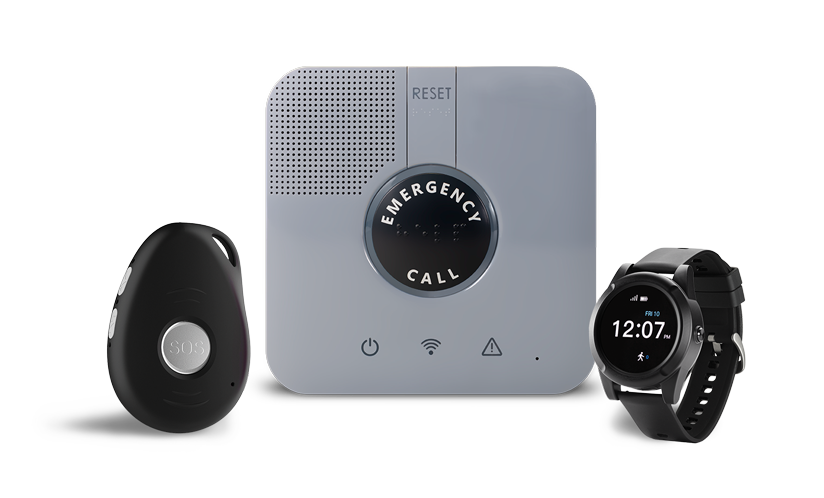
A fall can happen in seconds — but the consequences can last much longer. That’s why fall detection devices are designed to automatically recognize when a serious fall occurs and connect you to help right away — even if you’re unable to press your emergency button.
One of the greatest dangers after a fall is what medical professionals call a “long lie,” when someone remains on the ground for an extended period without assistance. These delays can increase the risk of dehydration, hypothermia, pressure injuries, and hospitalization. Automatic fall detection helps reduce that risk by triggering an alert the moment a fall is detected.
In this guide, we’ll explain how fall detection devices work, the technology that powers them, and how they add an extra layer of protection for seniors and anyone at risk of falling. Understanding how these systems respond in real time can help you choose the right solution for safer, more confident living.
What is Fall Detection?
Fall detection is a safety feature built into many medical alert systems that uses advanced motion sensors to automatically identify when a serious fall may have occurred. Unlike traditional alert buttons that require you to press for help, fall detection technology can send an alert on your behalf — even if you’re unconscious or unable to move.
These systems use a combination of accelerometers, gyroscopes, and intelligent algorithms to distinguish between normal daily movement and the sudden impact of a fall. When a fall is detected, the device connects you to a 24/7 monitoring center, where trained specialists can assess the situation and dispatch emergency services if needed.
For individuals who live alone or want added protection at home, fall detection provides an important safety net — supporting independence while offering reassurance to family members and caregivers.
For more information, check out our blog on 5 reasons to have a fall detection device.
How Does Fall Detection Work?
Fall detection technology is designed to recognize the unique motion pattern of a serious fall — and respond immediately.
Devices equipped with automatic fall detection use a combination of accelerometers, barometric sensors, and intelligent algorithms to continuously monitor movement.
-
Accelerometers measure changes in speed, direction, and impact force.
-
Barometric sensors detect subtle shifts in air pressure to determine changes in elevation — such as moving from standing upright to lying on the ground.
-
Advanced algorithms analyze this data in real time to distinguish between everyday movements (like sitting quickly or dropping the device) and a true fall event.
When the system detects a fall pattern, it automatically initiates a call to the 24/7 monitoring center. A trained specialist will attempt to communicate through the device’s two-way speaker. If the user does not respond or confirms they need assistance, emergency services are dispatched immediately.
To minimize false alarms, modern fall detection systems are carefully calibrated to differentiate between routine activity and genuine emergencies. This balance of sensitivity and precision ensures that help is sent when it’s truly needed — without unnecessary disruptions.
Automatic fall detection provides an added layer of protection, offering reassurance to users and peace of mind to the families who care about them.
Key Features of Fall Detection Devices
LifeStation’s fall detection feature is just one of the many benefits that come with the best medical alert systems. In addition to fall detection, these medical alert devices offer other critical safety features, such as:
- Voice Prompts: Clear verbal instructions guide users through the alert process, offering reassurance and directions in emergency situations.
- Enhanced Location Services: GPS-enabled mobile devices ensure that users’ locations are tracked in real-time, enabling emergency services to respond quickly, whether at home or on the move.
- Water-resistant or Waterproof Devices: Designed for continuous wear, even in high-risk areas like the bathroom, where falls are more likely to happen.
- Medication Reminders: These reminders help users manage their daily medications, supporting those who need to keep on top of important health routines.
- Reliable Network Coverage: These medical alert devices provide constant connectivity, ensuring that help is available regardless of location.
Medical Alert Systems and Medicare Advantage
Some of the best medical alert systems, including fall detection devices, may be covered by Medicare Advantage plans, making them more affordable for seniors. Certain medical alert companies offer personal emergency response systems that include fall detection as part of their overall services, with wearable devices covered under Medicare Advantage. This helps reduce costs while providing essential protection for users. If you’re considering a fall detection device, it’s important to check with your provider to see if you qualify for coverage under these plans.
Choosing the Right Fall Detection Device for Your Needs
When choosing a fall detection device, consider the specific features that suit your lifestyle. For those who are often on the go, a mobile device with GPS tracking and fall detection sensors may be the best option. These personal emergency response systems allow users to move freely while ensuring they remain protected in case of a fall. On the other hand, individuals who spend more time at home may benefit from alert systems with fall detection that provide comprehensive coverage and connect seamlessly to emergency services.
Many medical alert companies, such as LifeStation, offer a variety of products to meet different needs. Some systems even provide extra protection, such as smoke or carbon monoxide detection, to further safeguard users. Additionally, choosing a device from one of the best medical alert systems ensures reliability and superior customer service, which can make a significant difference in an emergency.
The Importance of Fall Detection Technology in Everyday Life
The best fall detection devices are equipped with the latest technologies to ensure timely and accurate responses to emergencies. As the population ages, more seniors are seeking to live independently, and the demand for fall detection devices continues to rise. These medical alert devices are crucial for maintaining that independence while providing the security that help is always available if needed. With innovations in fall detection sensors, today’s devices are more accurate and user-friendly than ever before.
Medical alert companies have recognized the need for enhanced features, integrating mobile devices, wearable devices, and systems with fall detection that can adapt to the user’s needs. By offering features like medication reminders, water-resistant designs, and false alarm prevention, these systems not only provide safety but also convenience. With the support of medical alert companies like LifeStation, users can continue their daily activities knowing that they are protected in the event of a fall.
See our blog on 5 reasons to have a fall detection device for more information.
Fall Detection Devices
In Home Medical Alert System

Our at home alert device connects wirelessly to our monitoring center, and you get the independence and peace of mind that comes with our leading medical alert service without the need of a traditional landline.
Starting at $32.95
Mobile Medical Alert System

For those who have an active lifestyle, LifeStation’s Sidekick Smart is a smartwatch designed for seniors who need the key benefits of a medical alert system in stylish wearables. Along with all of our other medical alert device features, this smartwatch allows you to call for emergency help, track steps, and monitor your heart rate.
Starting at $43.95/month
Get help today and shop more medical alert systems from LifeStation, so you can find the device that is best fit to your lifestyle.